

Many developers get stuck when their system starts slowing down or breaking after updates, and Python environments often feel confusing to manage. If you are trying to figure out how to Upgrade Oxzep7 Python, you might already be dealing with errors, compatibility issues, or performance drops that slow your work. It can feel frustrating when things stop working without a clear reason.
In this blog, you will learn simple and practical steps to Upgrade Oxzep7 Python without confusion. We will also cover important tips, common mistakes, and helpful solutions so you can avoid downtime. By the end, you will have a clear understanding of how to upgrade smoothly and keep your system stable and fast.
What Does Upgrade Oxzep7 Python Mean?
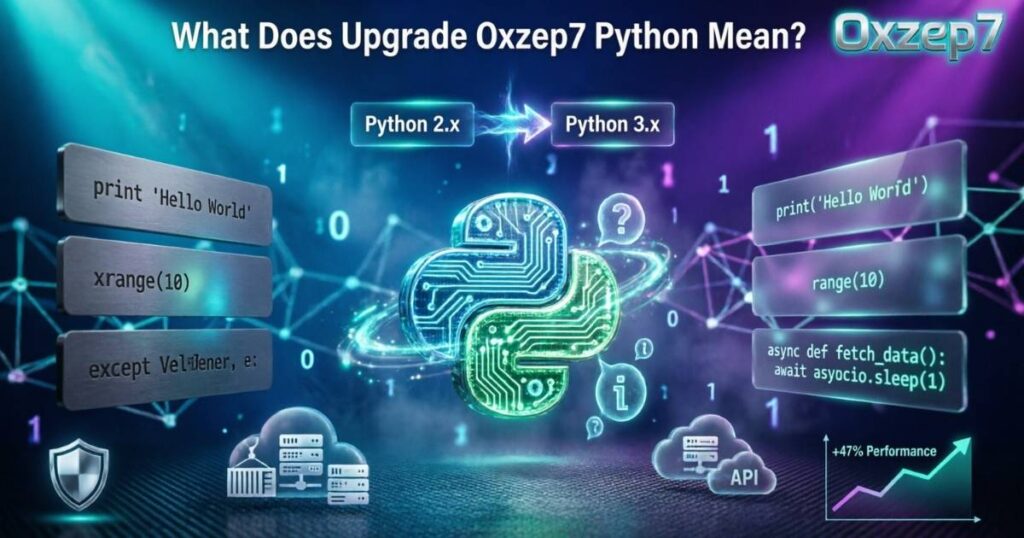
The term Upgrade Oxzep7 Python refers to updating the Python environment, dependencies, and system components used within the Oxzep7 runtime. It usually involves moving to a newer Python version to improve security, performance, and compatibility.
In simple terms, it is a structured process that ensures your application continues running smoothly with modern Python standards. The interpretation may vary depending on the situation:
- System Modernization Perspective
It means updating legacy code and moving toward modern Python version upgrade practices. This helps reduce technical debt and improves long-term maintainability, but it may require code adjustments. - Security Enhancement Perspective
It involves applying Python security patches and fixing vulnerabilities in older versions. While it strengthens system protection, it may temporarily break outdated dependencies. - Performance Optimization Perspective
It focuses on improving execution speed and reducing memory usage through performance optimization techniques. However, results can vary depending on system configuration and workload. - Compatibility and Integration Perspective
It ensures compatibility fixes for modern libraries, frameworks, and APIs. This supports smoother integration but may require dependency management updates. - Deployment and Maintenance Perspective
It aligns the system with CI/CD pipeline workflows and production deployment standards. While it improves scalability, it also demands careful testing and rollback planning.
Why You Should Upgrade Oxzep7 Python
Every system ages over time, and what once worked smoothly can slowly become slow or risky. That’s where a smart Upgrade Oxzep7 Python comes in. It is not just about new features, but about keeping your system safe, fast, and ready for modern demands.
Think of it like upgrading your phone’s operating system. You may not see huge changes at first, but under the hood everything becomes more stable, secure, and efficient. Let’s break down the key reasons why this upgrade really matters.
Security Improvements
Security is one of the biggest reasons to upgrade. Older Python environments often contain vulnerabilities that attackers can exploit. With a proper Python version upgrade, you get updated security patches that close these gaps. It also improves secure coding practices and reduces risks from outdated libraries. In simple terms, it’s like replacing weak locks with stronger, modern security systems.
Performance Enhancements
Performance improvements are another major benefit of upgrading. New Python versions are optimized for speed, memory usage, and efficiency. This directly improves application performance optimization and reduces system lag during heavy workloads. Even small improvements in execution time can make a big difference in large-scale systems.
| Area | Benefit |
| Execution Speed | Faster response time for applications |
| Memory Usage | Lower resource consumption |
| Async Processing | Better handling of multiple tasks |
| System Load | Reduced server pressure |
| Overall Efficiency | Smoother runtime performance |
Compatibility With Modern Libraries
Modern development depends heavily on updated libraries and frameworks. An outdated environment often leads to package version compatibility issues. Upgrading ensures smooth integration with new tools, APIs, and frameworks. It also supports legacy code modernization, making your system more flexible and easier to extend in the future.
Long-Term Maintainability
Long-term maintainability is about keeping your system easy to manage over time. Without upgrades, technical debt builds up quickly, making future updates harder and riskier. A structured upgrade strategy ensures cleaner code, better documentation, and fewer surprises during future deployments. It’s like keeping your house organized instead of letting clutter pile up.
Read More :Top Best Wireless Earbuds Under 200 Dollars 2024 Picks
How to Identify Your Current Oxzep7 Python Version
Before starting any upgrade, knowing your current system state is the smartest first step. Many upgrade issues in an Upgrade Oxzep7 Python process come from not checking the existing Python version properly. It’s like trying to replace parts of a machine without knowing what’s already inside.
Understanding your environment helps you avoid compatibility problems and hidden dependency issues. It also gives you a clear baseline for planning updates safely. Let’s break it down in a simple and practical way.
Environment Assessment Table
| Check Area | What You Look For | Why It Matters |
| Python Version | Installed runtime version | Confirms upgrade need |
| Installed Packages | Active dependencies list | Detects compatibility issues |
| System Path | Python execution path | Ensures correct environment usage |
| Virtual Environments | Active isolated setups | Prevents dependency conflicts |
| Configuration Files | Environment variables setup | Maintains system stability |
Pre-Upgrade Checklist for Oxzep7 Python
Before you start any major system update, preparation is everything. A successful Upgrade Oxzep7 Python process depends more on planning than execution. Think of it like packing for a long journey you don’t want surprises halfway through. A solid checklist helps you avoid downtime, errors, and unexpected failures.
This stage is all about safety and clarity. You review your system, protect your data, and create a stable base for the upgrade. Let’s go through each important step in a simple and practical way.
Audit the Current Environment
Before making any changes, you need to understand your existing setup. A full environment audit helps you identify installed packages, Python versions, and hidden dependency issues. This step is crucial because it reveals outdated libraries and compatibility risks. Think of it like checking the health of your system before surgery it helps prevent surprises during the upgrade process.
- Check installed Python version and dependencies
- Identify outdated or deprecated packages
- Review system configuration files
- Analyze dependency management structure
- Document current environment state
Backup Everything
Backing up your system ensures you can recover if something goes wrong. This includes code, configurations, and environment settings. A proper backup strategy protects against data loss during a Python environment upgrade. It’s like having a spare key—you hope you don’t need it, but it saves you when things go wrong unexpectedly.
- Backup source code repositories using Git version control
- Save environment variable configurations
- Export dependency lists (requirements files)
- Store database snapshots if applicable
- Create rollback strategy documentation
Review Release Notes
Release notes provide important details about changes in the new Python version. They highlight deprecated syntax, security patches, and compatibility fixes. Ignoring them can lead to unexpected issues after upgrade. It’s like reading instructions before assembling furniture—skipping it often leads to confusion later.
- Check Python version upgrade best practices
- Identify deprecated features and syntax changes
- Review security improvements and patches
- Understand compatibility fixes for libraries
- Note performance optimization updates
Create a Test Environment
A test environment lets you safely simulate the upgrade before applying it to production. This is where you validate changes without risk. It helps catch dependency conflicts and performance issues early. Think of it as a rehearsal before the main performance—everything must work smoothly before going live.
- Set up isolated virtual environment setup
- Mirror production configuration settings
- Run dependency installation tests
- Perform regression testing Python workflows
- Validate staging environment behavior
Step-by-Step Process to Upgrade Oxzep7 Python
Upgrading a Python system can feel tricky at first, but when you break it into steps, it becomes much easier to handle. A proper Upgrade process ensures stability, fewer errors, and smooth performance. Think of it like building a new engine while keeping the car running safely on a test track.
The key is to follow a structured flow instead of rushing through changes. Each step plays an important role in preventing compatibility issues, dependency conflicts, and unexpected downtime. Let’s walk through the complete process in a simple and practical way.
Install the Target Python Version
The first step is installing the correct Python version required for your upgrade. This sets the foundation for the entire Python version upgrade process. You can install it using official installers or package managers depending on your system. It’s important to ensure compatibility with existing Oxzep7 runtime upgrade requirements before moving forward, as incorrect versions can break your environment setup.
Recommended Installation Comparison
| Method | Description | Advantages |
| Official Installer | Direct download from Python website | Stable, reliable, and widely supported |
| Package Manager | Install via system tools like apt or brew | Fast updates and easy version switching |
| Container Setup | Use Docker-based Python environment | Isolated, consistent, and production-ready |
| Source Build | Compile Python from source code | Full customization and control |
Create a Fresh Virtual Environment
Once Python is installed, the next step is creating a virtual environment. This ensures dependency isolation and prevents conflicts with existing packages. It’s like giving your upgrade a clean workspace where nothing old interferes. This step is critical for avoiding package version compatibility issues and maintaining a clean development structure.
Reinstall Dependencies
After setting up the environment, reinstall all required dependencies carefully. This ensures your system retains all necessary functionality. During this stage, dependency management becomes crucial because outdated or mismatched libraries can cause errors. Always verify package versions and ensure they align with the new Python upgrade checklist.
Update Oxzep7-Specific Components
Now update all components related to Oxzep7. This includes internal modules, scripts, and configuration files. These updates ensure compatibility with modern Python features and remove deprecated syntax. It’s a key step in legacy code modernization and helps improve system reliability and long-term maintainability.
Run Automated Tests
Finally, run automated tests to verify everything works correctly. This includes regression testing Python workflows, integration checks, and performance validation. Think of it as a final inspection before launching a rocket. It ensures your upgraded system is stable, secure, and ready for production deployment without hidden issues.
Common Challenges During an Oxzep7 Python Upgrade
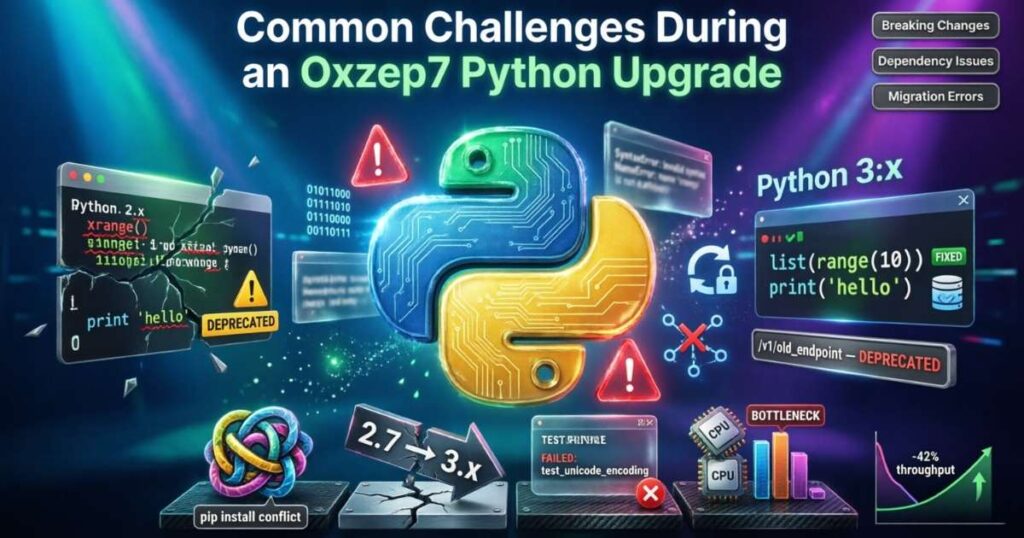
Every upgrade looks smooth on paper, but real systems often behave differently. When you start an Upgrade process, small issues can quickly turn into unexpected roadblocks. Think of it like renovating a house while still living in it everything works, but not always as expected.
Most challenges come from hidden dependencies, outdated code, or environment mismatches. The good news is that once you understand them, they become much easier to handle. Let’s go through the most common problems and how they appear in real systems.
Dependency Conflicts
Dependency conflicts happen when different packages require incompatible versions of the same library. During a Python environment upgrade, this can break your application without warning. For example, one module may need an older version while another requires the latest update. This creates a mismatch that affects system reliability and slows down deployment workflows.
Package Conflict Resolution Checklist
| Problem | Issue | Solution |
| Version mismatch | Multiple libraries require different versions | Use virtual environment isolation |
| Broken dependencies | Missing or outdated packages | Run dependency management audit |
| Incompatible updates | New version breaks old functionality | Pin package version compatibility |
| Circular dependencies | Packages depend on each other indirectly | Refactor imports and structure |
| Installation failure | Conflicting build requirements | Clean reinstall in staging environment |
Deprecated Syntax
One of the most common issues is deprecated syntax. Older Python code may stop working after a version upgrade. For example, functions or libraries removed in newer releases can trigger errors. This is why legacy code modernization is important. Updating syntax ensures smoother execution and avoids runtime failures during production deployment.
Environment Variable Changes
Sometimes, environment variable management behaves differently after an upgrade. Paths may break, or configurations may not load correctly. It’s like changing the layout of a control panel—everything is there, but not in the same place. This can affect application startup, authentication, and deployment workflows if not reviewed carefully.
Performance Regressions
Not every upgrade improves speed automatically. In some cases, performance optimization after upgrade is needed because certain processes may slow down. This can happen due to library changes or inefficient compatibility fixes. Monitoring benchmarks helps detect these issues early before they affect real users.
Rollback and Recovery
When things go wrong, rollback strategy becomes critical. A failed upgrade can disrupt production systems if recovery steps are not ready. Think of it like having a backup parachute you hope you never need it, but it’s essential. A strong rollback plan ensures quick recovery and minimal downtime.
Read More: Makmur76 Login Guide: Step-by-Step Instructions
Rollback and Recovery Planning for Oxzep7 Python Upgrades
Rollback and recovery planning is a critical part of any Upgrade process. It ensures that if something goes wrong during or after the upgrade, you can quickly restore the system to a stable state without major downtime.
This step is often overlooked, but it plays a huge role in production safety. A well-prepared rollback strategy protects against unexpected errors, dependency conflicts, or performance regressions. The interpretation may vary depending on the situation:
- Risk Control Perspective
Rollback planning acts as a safety net during Python environment upgrade failures. It allows teams to revert changes quickly, reducing system downtime and preventing service disruption. - Data Protection Perspective
It ensures all code, configurations, and environment variables are safely restored using Git version control backup and system snapshots. Without it, recovery becomes slow and risky. - Deployment Stability Perspective
A rollback strategy guide supports stable production deployment by enabling quick switching between versions. However, it requires proper staging environment setup and testing. - Dependency Recovery Perspective
It helps resolve dependency conflicts by restoring previous package versions and dependency management states. This avoids broken builds or missing libraries. - Operational Continuity Perspective
It ensures business systems continue running even after failed upgrades. While effective, it depends heavily on proper planning and continuous integration testing workflows.
Essential Rollback Components
| Component | Description |
| Version Control Backup | Keeps previous working code safe using Git or similar tools |
| Environment Snapshots | Saves system state for quick restoration |
| Dependency Records | Tracks package versions for accurate rollback |
| Configuration Backup | Stores environment variables and system settings |
| Automated Rollback Scripts | Enables fast recovery during upgrade failure |
| Monitoring Logs | Helps identify what caused the failure |
A strong rollback system is not just a backup plan it is a core part of a secure upgrade strategy.
Best Practices for a Successful Upgrade Oxzep7 Python Strategy
A smooth upgrade doesn’t happen by chance. It comes from smart planning and consistent habits. When you handle an Upgrade project carefully, you reduce risks, avoid downtime, and keep your system stable. Think of it like building a bridge step by step instead of rushing across unstable planks.
The goal is simple: make your Python environment upgrade safe, predictable, and easy to manage. With the right strategy, even complex systems can be updated without stress. Let’s go through the best practices that make the biggest difference.
Automate Where Possible
Automation removes human error and speeds up the Python upgrade process. Instead of repeating manual steps, use scripts and CI/CD pipelines to handle testing, deployment, and validation. For example, automated regression testing ensures your system still works after every change. This is especially useful in large environments where manual upgrades can easily miss small but critical issues.
- Use CI/CD Python upgrade pipeline for deployments
- Automate continuous integration testing workflows
- Run automated dependency checks before upgrades
- Schedule performance benchmarking Python tests
- Trigger alerts through application monitoring tools
Upgrade Incrementally
Big jumps often create big problems. That’s why incremental upgrades work better for stability. Instead of upgrading everything at once, move step by step and test each stage. Think of it like updating one room in a house instead of rebuilding the entire building at once. This reduces dependency conflicts and makes rollback easier if something breaks.
- Upgrade Python version in stages
- Test each environment before moving forward
- Apply compatibility fixes gradually
- Use staging environment setup for validation
- Track changes using Git version control backup
Document the Process
Good documentation saves time during future upgrades. Every step in your Python migration checklist should be recorded clearly. This helps teams understand what was done, what worked, and what failed. For example, noting dependency version changes helps avoid repeated conflicts later. Documentation also improves collaboration between developers and operations teams.
- Maintain Python upgrade checklist for enterprise systems
- Record dependency management changes
- Document release notes analysis
- Track environment variable management updates
- Save rollback strategy guide details
Monitor After Deployment
Even after a successful upgrade, monitoring is essential. Systems can behave differently under real user load. Post-deployment monitoring helps detect hidden issues early, such as memory leaks or performance drops. Think of it like checking a car after a long trip to ensure everything still runs smoothly.
- Use real-time application monitoring tools
- Track performance optimization after upgrade
- Monitor system reliability metrics
- Review logs for unexpected errors
- Validate production deployment guide stability
Post-Upgrade Optimization Tips
Upgrading a system is only half the journey. The real value comes after everything is updated and running. Post-upgrade optimization ensures your Python environment stays fast, secure, and stable. Think of it like tuning a car after a major engine upgrade so it performs at its best on every drive.
Once you complete the Upgrade process, small improvements can make a big difference. You refine performance, remove hidden issues, and unlock modern Python capabilities. Let’s break it down into simple, practical areas that actually matter.
Optimize Application Performance
After upgrading, focus on improving runtime speed and efficiency. This includes checking slow functions, reducing memory usage, and improving execution flow. For example, replacing outdated loops with optimized Python constructs can boost speed. Use profiling tools to identify bottlenecks. In many cases, even small tweaks can improve response time and reduce server load significantly over time.
Key actions:
- Run performance benchmarking Python tools
- Analyze memory profiling optimization reports
- Remove unused dependencies
- Optimize database queries
- Improve async performance improvements
Leverage Modern Python Features
New Python versions bring smarter and faster features. After an Oxzep7 runtime upgrade, take advantage of updated syntax and libraries. For instance, modern pattern matching or improved async handling can simplify complex logic. This is where legacy code modernization becomes important. Updating old structures makes your system cleaner, faster, and easier to maintain in the long run.
Key actions:
- Replace deprecated syntax removal patterns
- Use modern async/await improvements
- Apply updated standard libraries
- Refactor legacy code for clarity
- Improve dependency management approach
Strengthen Infrastructure Security
Security should be a top priority after any Python version upgrade. New versions often include Python security patches that fix hidden vulnerabilities. After upgrading, review authentication flows, API access, and environment variables. Think of it like locking all doors after installing a new security system small checks now prevent major issues later.
Key actions:
- Apply latest Python security patches
- Harden environment variable management
- Review access permissions
- Secure API endpoints
- Validate containerized Python deployment security
Validate Long-Term Stability
Once everything is optimized, focus on stability. Run regression testing Python workflows to ensure nothing breaks over time. Monitor logs, track errors, and check system performance regularly. This step ensures your upgrade doesn’t just work today but continues to work smoothly in production environments under real user loads.
Key actions:
- Run continuous integration testing
- Monitor application monitoring tools
- Perform long-term load testing
- Validate cloud deployment Python stability
- Check rollback strategy readiness
Frequently Asked Questions
What is Upgrade Oxzep7 Python?
Upgrade Oxzep7 Python updates Python system version. It improves performance, security, and compatibility. Upgrade keeps systems modern and stable.
Why is Upgrade Oxzep7 Python important?
Upgrade Oxzep7 Python improves security and speed. It fixes bugs and supports new libraries. Upgrade ensures stable system performance.
How do you start Upgrade Oxzep7 Python process?
Upgrade Oxzep7 Python starts with version check and backup. Then prepare environment and plan steps. Upgrade needs careful testing.
What are risks in Upgrade Oxzep7 Python?
Upgrade Oxzep7 Python risks include dependency errors and crashes. It may break old code. Oxzep7 Python needs proper testing.
How to avoid errors during Upgrade Oxzep7 Python?
Use backups, testing, and virtual environments. Upgrade Oxzep7 Python should be staged first. Always plan rollback for safety.
What tools help Upgrade Oxzep7 Python process?
CI/CD tools, testing frameworks, and version control help. Oxzep7 Python Upgrade also uses monitoring tools and dependency managers.
Can Upgrade Oxzep7 Python improve performance?
Yes, Oxzep7 Python Upgrade boosts speed and efficiency. It reduces memory use and improves system response.
How to handle dependency issues in Upgrade Oxzep7 Python?
Use version locking and virtual environments. Upgrade Oxzep7 Python fixes conflicts with proper package updates.
What is rollback in Upgrade Oxzep7 Python?
Rollback restores old stable version if upgrade fails. Oxzep7 Python Upgrade rollback ensures quick recovery and safety.
Is Upgrade Oxzep7 Python safe for production systems?
Yes, with testing and backups. Upgrade Oxzep7 Python is safe when staged properly and monitored during deployment.
Conclusion
In conclusion, Upgrade Oxzep7 Python is an important step for every modern system. Oxzep7 Python Upgrade improves speed, security, and long-term stability. Many systems slow down because they skip Oxzep7 Python Upgrade updates. That is why Oxzep7 Python Upgrade should always be planned carefully. With Oxzep7 Python Upgrade , you reduce errors and improve performance. It also helps your system stay compatible with new tools. Oxzep7 Python Upgrade makes development smoother and safer for all users.
Overall, Upgrade Oxzep7 Python is not just a technical task. It is a smart improvement strategy. Oxzep7 Python Upgrade supports better maintenance and clean code structure. When you follow Oxzep7 Python Upgrade best practices, you avoid risks and downtime. Always test before Oxzep7 Python Upgrade in production. A proper Oxzep7 Python Upgrade process ensures system reliability. In the end, Oxzep7 Python Upgrade keeps your application modern, fast, and ready for future growth.